

Running Group Cruises Without Losing Cabin Assignments
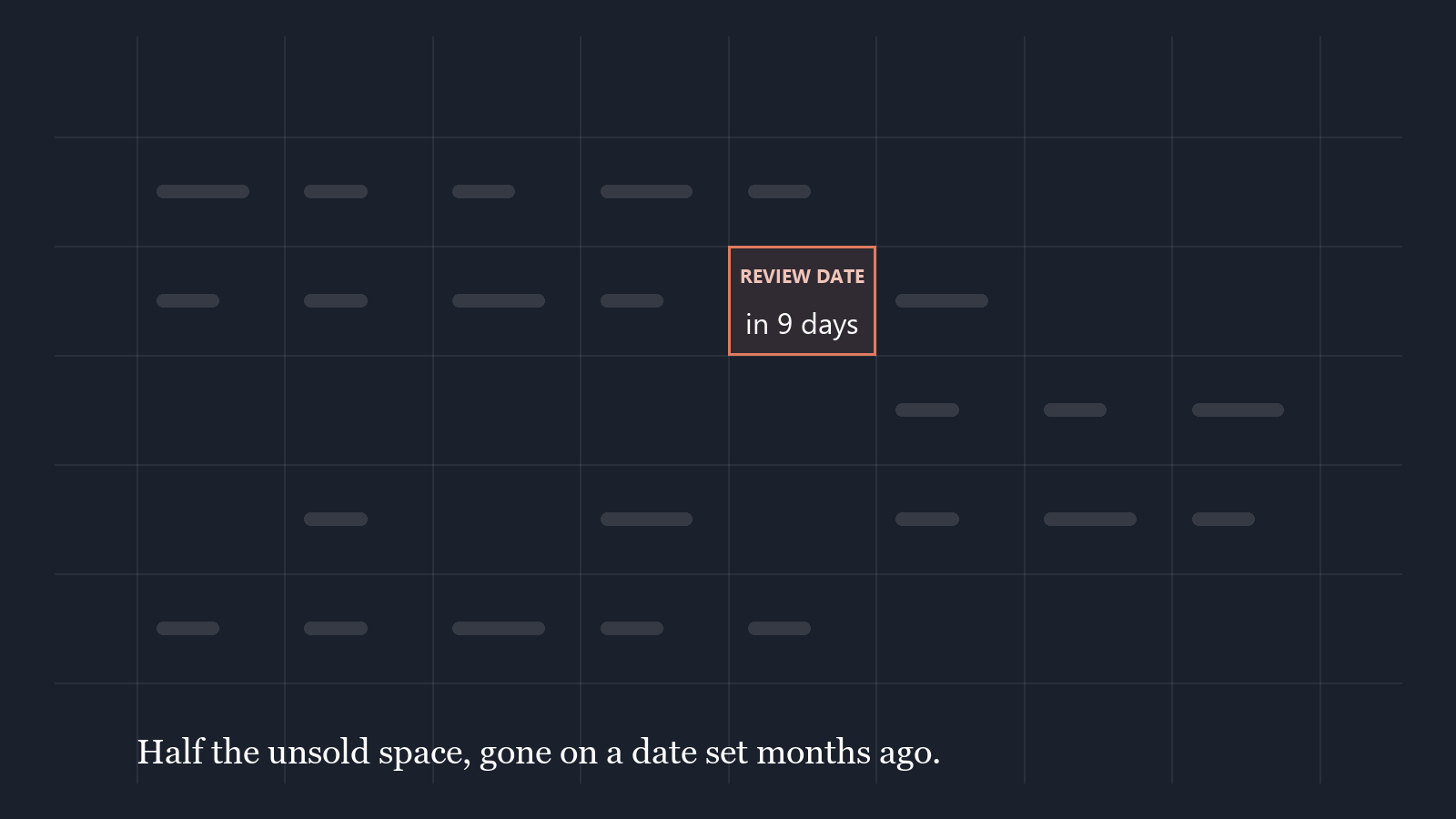
Eleven staterooms held. Four households have paid deposits, three have promised to this week, two have gone quiet, and one wants to move to a different category. The review date is in nine days, and you are not entirely certain which of those facts is still current.
A group is where the spreadsheet approach fails hardest, and it fails for a structural reason: a group is not several bookings. It is one contract with many bookings hanging off it, and the contract has its own clock.
The block is a clock, and it runs whether you look at it or not
When you block space, you are holding inventory the line intends to sell. It does not hold it indefinitely, and the terms for taking it back are specific.
At each review date, a minimum of 50% of unsold space may be recalled, and allocations with no activity are subject to 100% recall. Unsold space commonly comes back to the line somewhere around 120 to 150 days before sailing, depending on the line and the contract.
Read that again as an operational fact rather than a policy note. Half your unsold cabins can disappear on a date that was set months ago, and the trigger for losing all of them is no activity — which is to say, the block quietly dies of neglect rather than of any decision.
That is a deadline of a completely different kind from a final payment. A final payment is one date attached to one booking. A review date is attached to the contract and affects every unsold cabin under it at once.
The economics reward blocking early and punish forgetting
The reason agents take on groups despite the administration is that the terms are genuinely good.
A tour conductor credit — a free fare — is typically awarded for every eight cabins booked, though the ratio varies by line, with some river lines at one per nine full fares and others further out still. Amenity points accrue too, and the number available depends on when you block: the highest allocations, up to around ten points, go to space blocked as soon as itineraries open. Those points convert into things clients notice — onboard credit per stateroom, wine, a confirmed rate for an escort.
Most lines set the floor for a group at around eight staterooms; Royal Caribbean's definition is eight cabins, sixteen passengers, on the same sailing.
So the incentive structure is: block early, block enough, and keep activity on the block. All three are administration, and all three are the things that slip when a group is tracked in a document.
Three things a spreadsheet cannot hold about a group
Who is in which stateroom, currently. Assignments move. A household upgrades, a couple splits across two cabins, a late joiner takes the last inside. A cell that says "Cabin 8" was true when it was typed.
Who has paid, at what stage. In a group you are tracking deposits and final payments across many households on staggered schedules, plus the group's own deadlines, which are not the same dates. A single "paid" column collapses three different states into one.
What the block still holds. The gap between cabins contracted, cabins sold and cabins unsold is the number that determines whether you are about to lose space. It changes constantly and it is the number least likely to be current in a manual tracker.
The failure mode is not dramatic. It is arriving at a review date without knowing which of the eleven are genuinely committed, and either releasing space you could have sold or holding space you cannot fill and paying attention to it for another month.
Groups as a first-class record
Travel Agent Companion treats a group as its own entity rather than as a label on several bookings. Cabins, deadlines and group payments belong to the group, and individual bookings attach to it.
The practical consequence is that the three questions above are readable rather than assembled. Which cabins are assigned and to whom. Who has paid what, at which stage. What remains unsold against what was contracted, with the review date visible next to it.
Group deadlines are tracked separately from individual final payment dates, which matters because they genuinely are separate. The client's final payment is a property of their booking. The review date is a property of your contract, and it applies to space no client is attached to yet — which is precisely why it is the deadline most easily missed. Nobody chases you about a cabin nobody has booked.
Before you take the next group
Two habits are worth more than any tool.
Write the contract's dates down at the moment you block, not later. The review dates and the recall terms are in the confirmation and are easy to read once. They are very hard to reconstruct in a hurry four months on.
Then treat activity on the block as a task with a date, not a hope. If a review date takes 100% of a block with no activity, then "chase the two quiet households" is not a courtesy, it is the thing that keeps the space.
Groups are among the most profitable work an independent agent can do, and the profit is proportional to how well the administration is held rather than to how well the cruise is sold. That is an unglamorous thing to be true, and it is true.
Travel Agent Companion is free during early access. If your next group is currently a spreadsheet and a review date you half remember, join the waitlist.